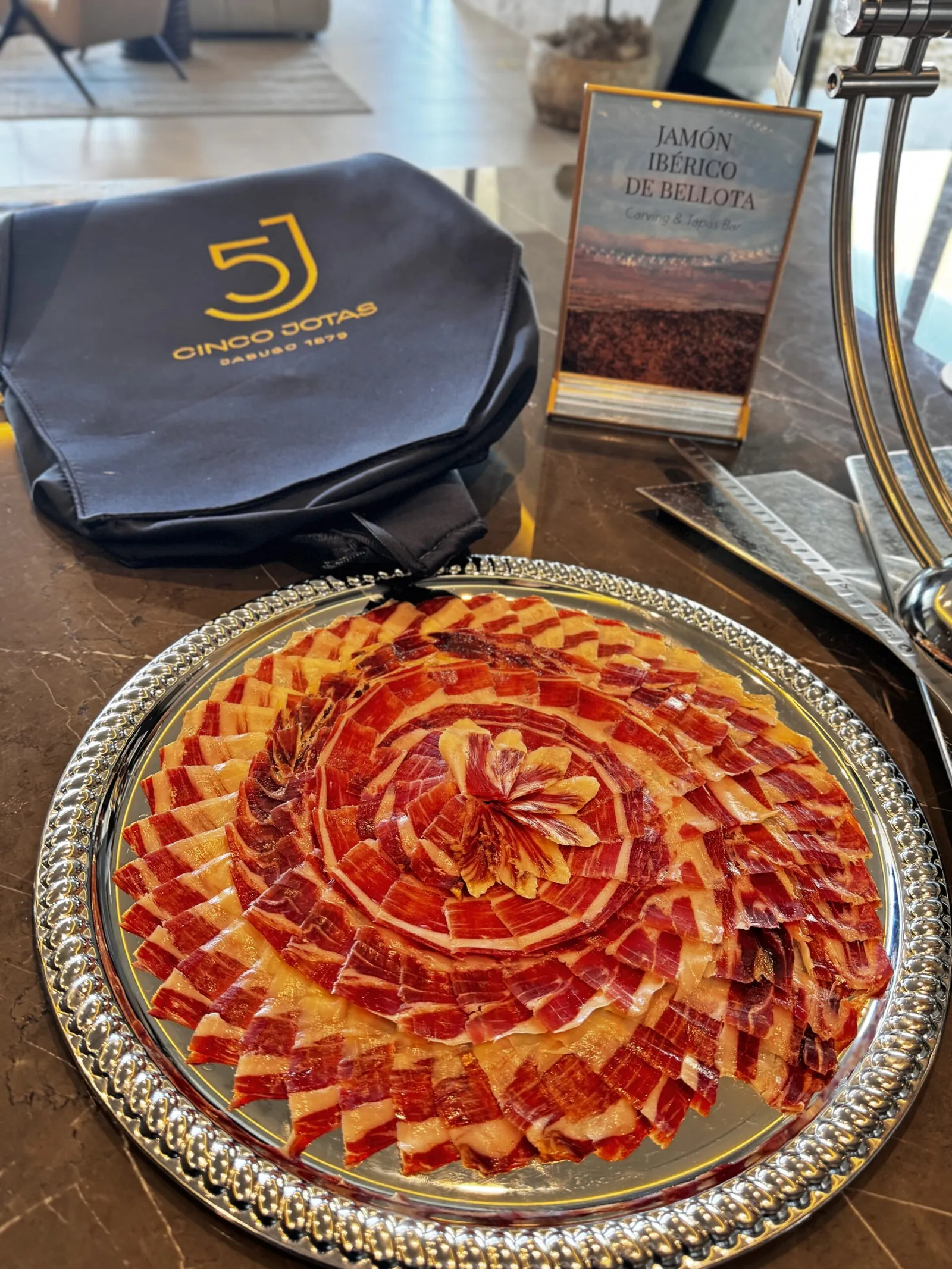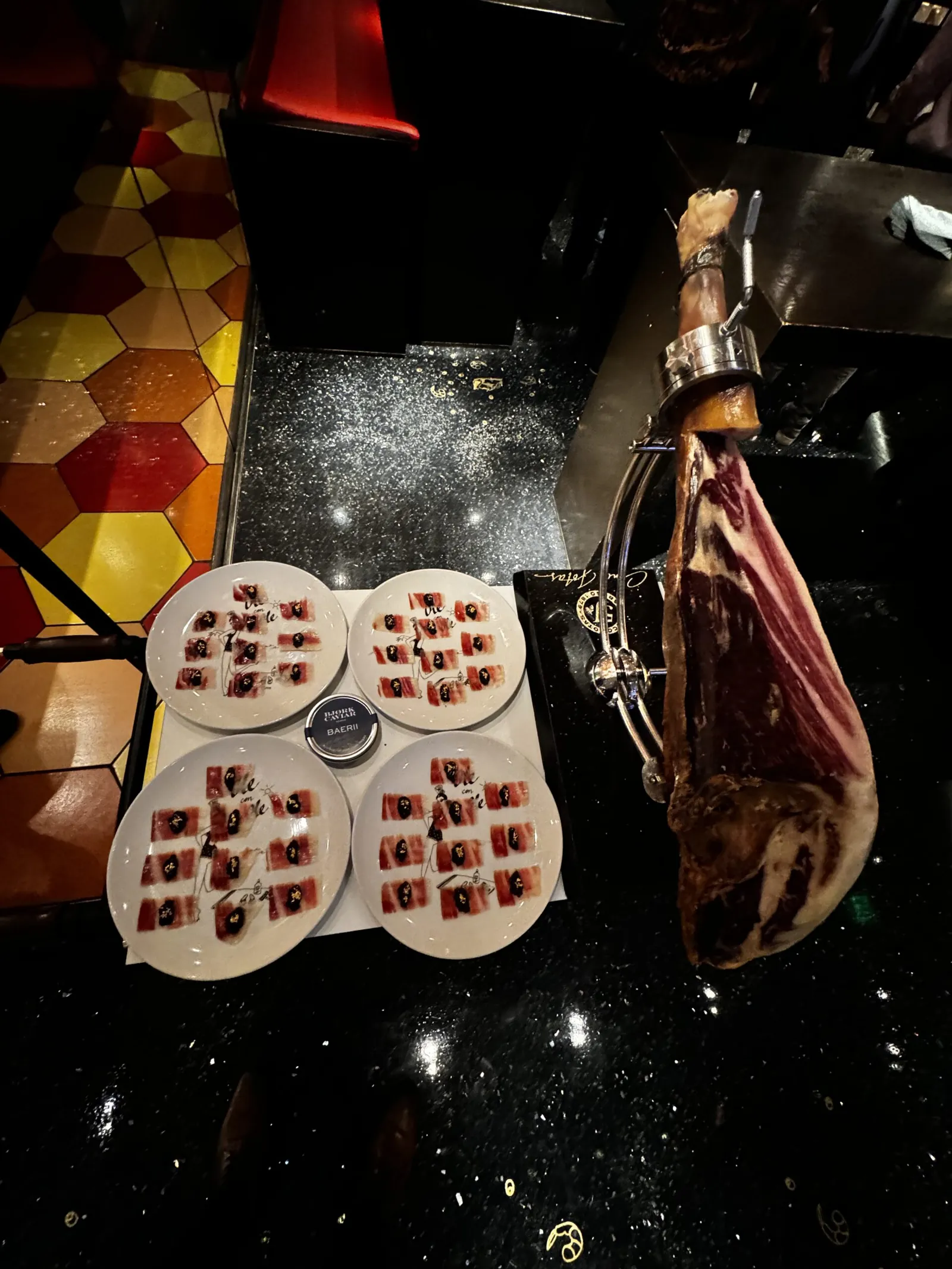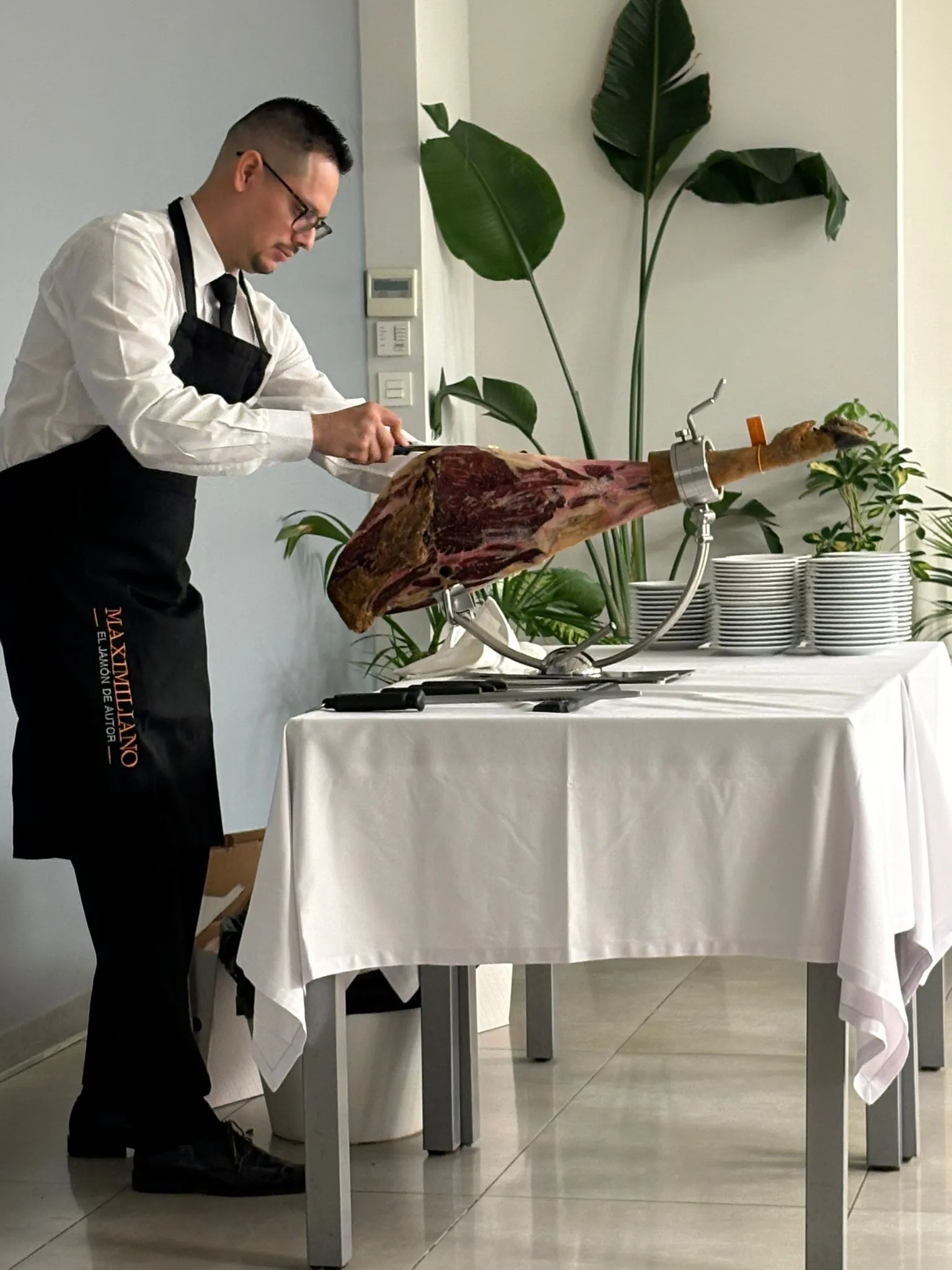
A good ham still needs careful carving. The stand, the condition of the knife and the way you work across the leg all influence what reaches the plate. These six common mistakes are worth checking before you start serving.
1. Serving slices straight from the fridge
Cold fat feels firmer and the aromas are less expressive. Follow the producer's instructions and allow only the quantity you intend to serve to come towards serving temperature. Keep it away from direct heat. In hot weather, room temperature is not a reason to leave food on display for hours.
2. Aiming for a large slice rather than an easy bite
A thin, bite-sized slice is generally more pleasant than a thick ribbon. Use a gentle, controlled motion and keep the carving surface reasonably level. When a section becomes difficult, make a smaller bite rather than forcing the blade through it.
3. Working with a moving leg or table
Check the stand's fixings and the table before opening the ham. Keep your free hand outside the path of the blade. A suitable cut-resistant glove can add protection, but it does not replace technique or remove the risk. Stop carving before adjusting the leg.
4. Using the wrong tool
The long, flexible slicing knife is for slices. Rind and harder areas need a suitable, more rigid tool. Do not lever with the slicing knife or saw it against the bone. Check the edge and read the guide to ham carving knives and equipment for the difference between honing and sharpening.
5. Trimming the entire leg at once
Remove rind and deteriorated outer fat only from the area you are about to carve. Exposing too much meat encourages it to dry out. Edible white fat belongs in the slice, so there is no need to remove it all. Old or rancid fat should not be used to cover the cut surface.
6. Forcing the final slices around the bone
Usable meat from the shank and awkward sections can be diced. Change the format rather than trying to carve a slice where there is no safe blade path. Bone, rind and discarded material do not count as servings: making good use of the leg does not mean everything is edible.
| Warning sign | Adjustment |
|---|---|
| The leg moves | Stop and check the stand and table |
| The blade needs considerable force | Check the edge and choice of tool |
| Slices are too thick | Make smaller slices and level the surface |
| The exposed meat dries out | Trim a smaller area and protect it after use |
For the full sequence, read how to carve Spanish ham step by step. If you are hosting a celebration, private ham carving lets you spend the time with your guests.
Explore ham carving for weddings, corporate events and private celebrations.
Check availability ↗