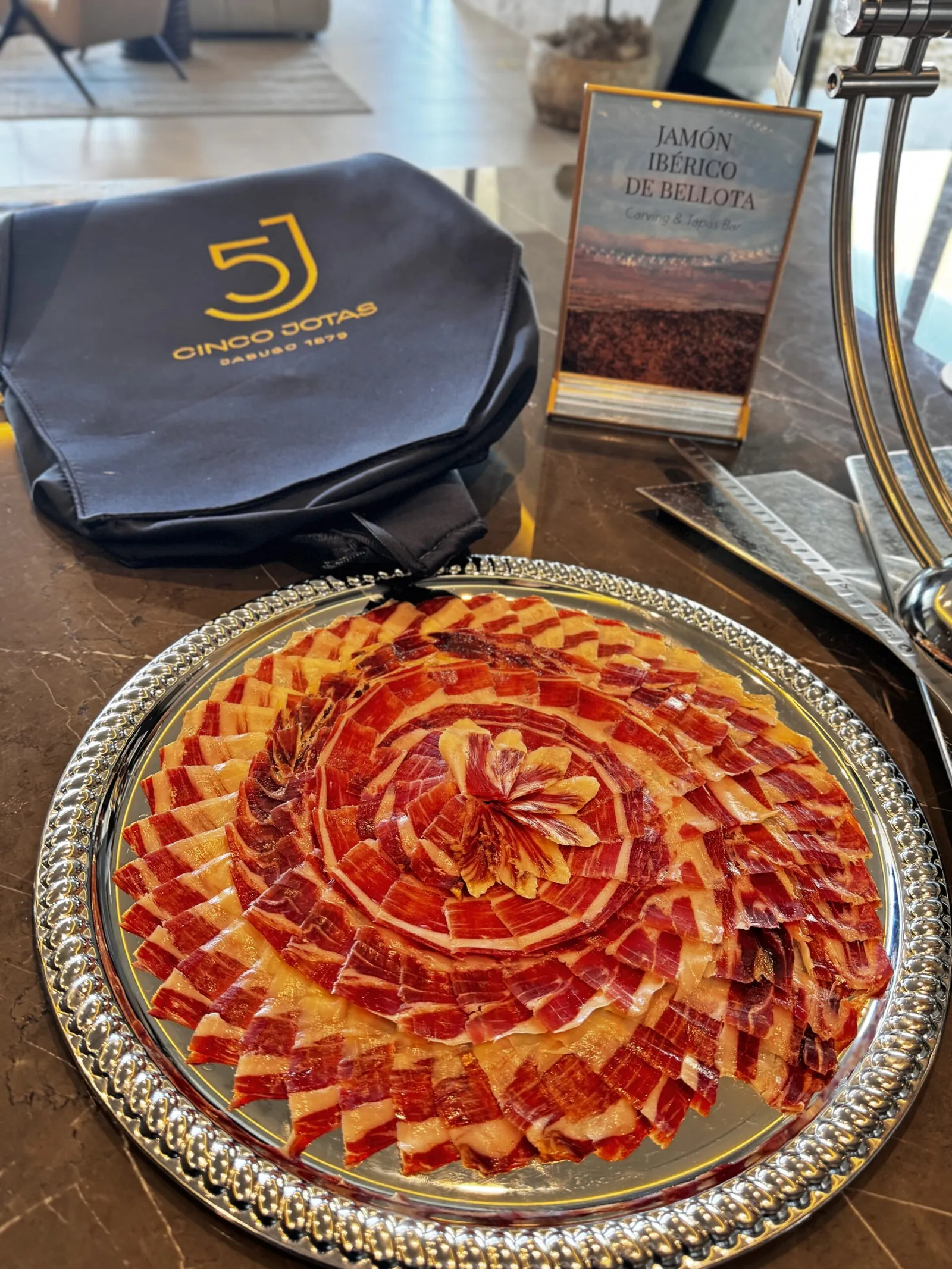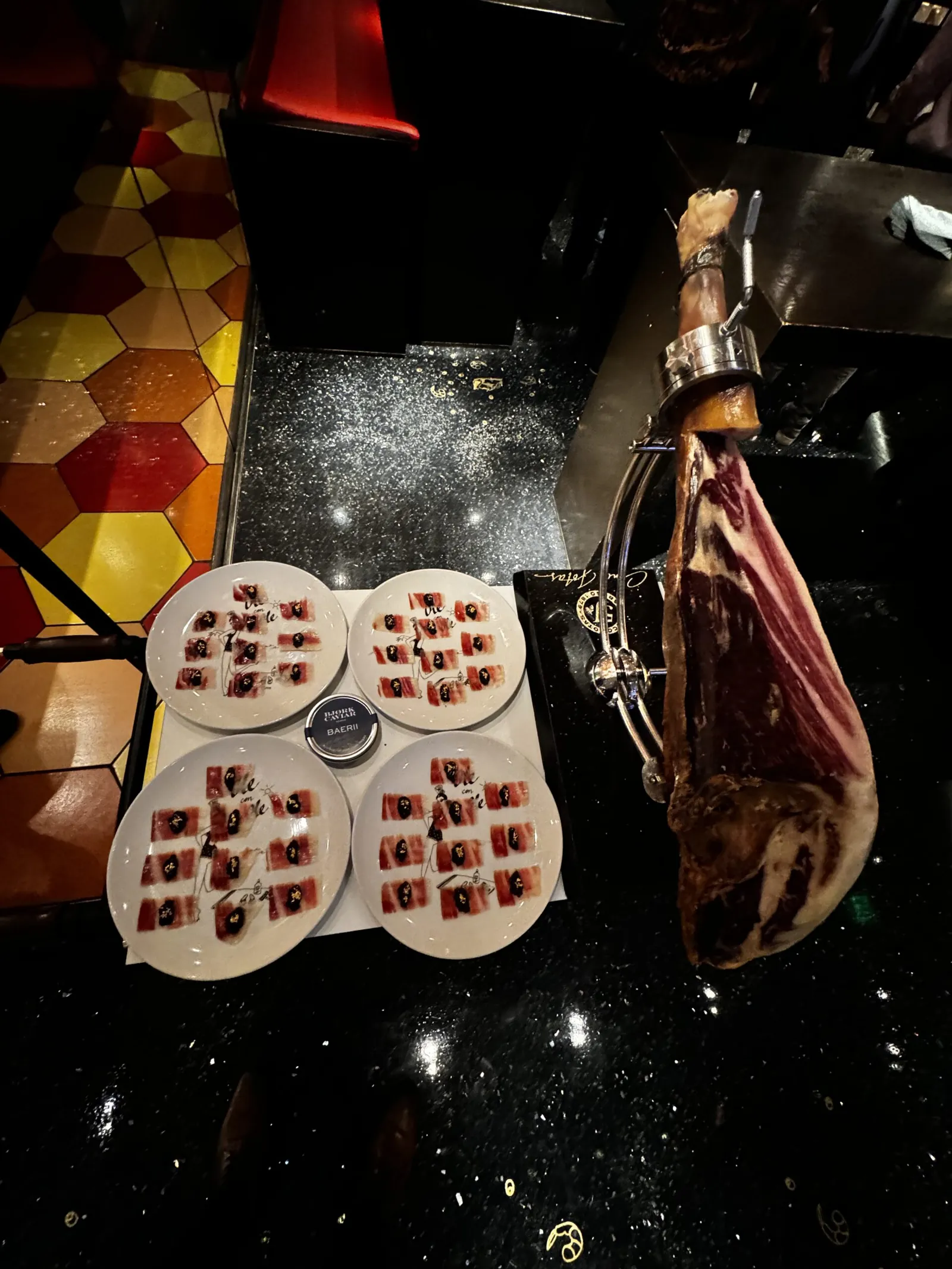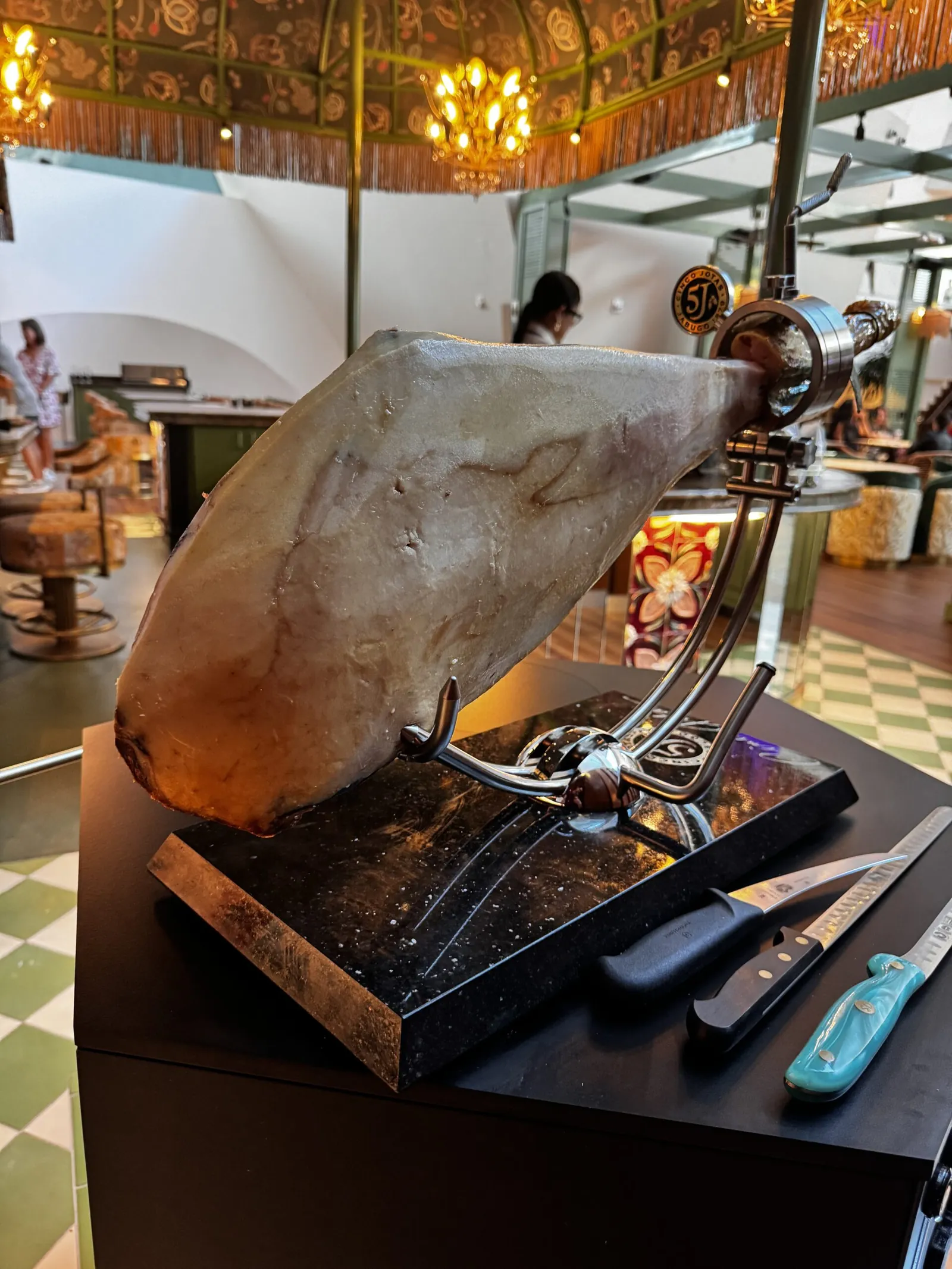
A carving station starts with a secure leg, appropriate tools and a clear place to plate the food. More knives do not improve the result if the table moves or the edge is in poor condition. Here is the basic equipment and what each part is for.
The ham stand and work surface
The stand must suit the leg and hold it firmly. Before starting, check that the table does not rock, that there is space on both sides and that you can turn the leg without improvising. A heavy base may help, but it cannot compensate for poor fixings or an unstable surface.
Use each tool for its intended job
| Tool | Purpose | Avoid |
|---|---|---|
| Ham slicing knife | Making slices with a long, flexible blade | Striking or levering against bone |
| Trimming knife | Removing rind with a suitable blade | Using a flexible blade on hard material |
| Small or boning knife | Separating meat around the bone | Forcing a cut you cannot see |
| Honing steel or stone | Edge maintenance appropriate to the tool | Improvising without learning the technique |
| Tongs and trays | Handling and serving slices | Mixing clean and used utensils |
Honing and sharpening are different
A conventional honing steel helps maintain or realign an edge; an abrasive stone removes material to restore it. Tools have different coatings and purposes, so follow the manufacturer's instructions. If you are unfamiliar with the process, professional sharpening is preferable to working with a damaged blade.
There is no universal number of slices after which you must hone. Stop if the knife needs force, wanders or no longer responds as expected. Keep the surrounding area clear while carrying out any maintenance.
Keep preparation and serving organised
Separate trimming from plating. Keep knives, tongs and surfaces clean and dry, and have a container for discarded material. Store food waiting to be served as directed. If you provide bread or other accompaniments, keep their ingredient information and control how utensils are shared.
Protection supports good technique
Your supporting hand must remain outside the knife's path. A suitable cut-resistant glove adds a protective layer, but it is not invulnerable and does not replace attention. Protect blades for storage and transport. Put the knife down safely before moving the stand or turning to speak to a guest.
Read how to carve Spanish ham step by step for the working sequence. For a private carving service, we agree the equipment and the space requirements before the celebration.
Explore ham carving for weddings, corporate events and private celebrations.
Check availability ↗