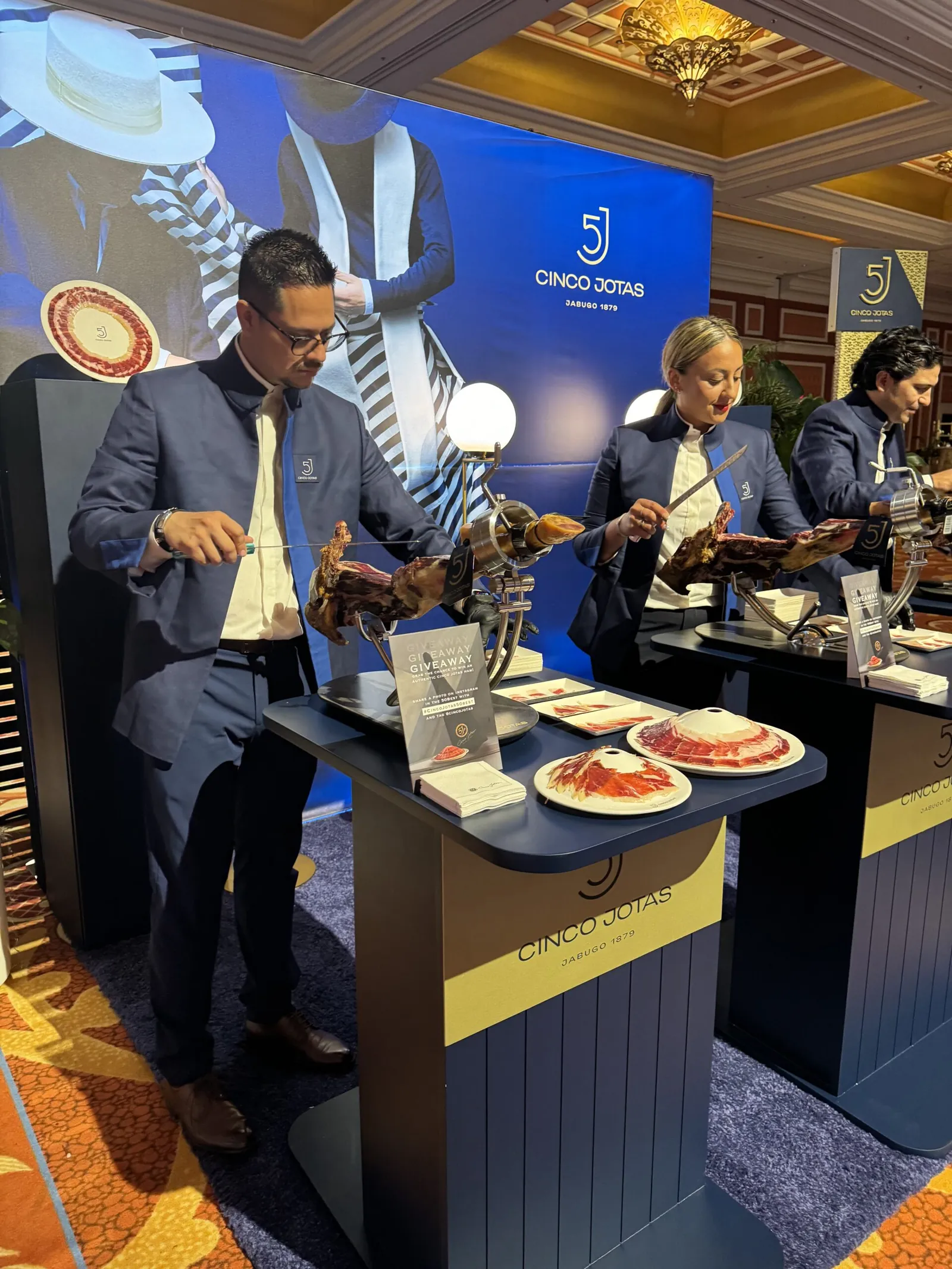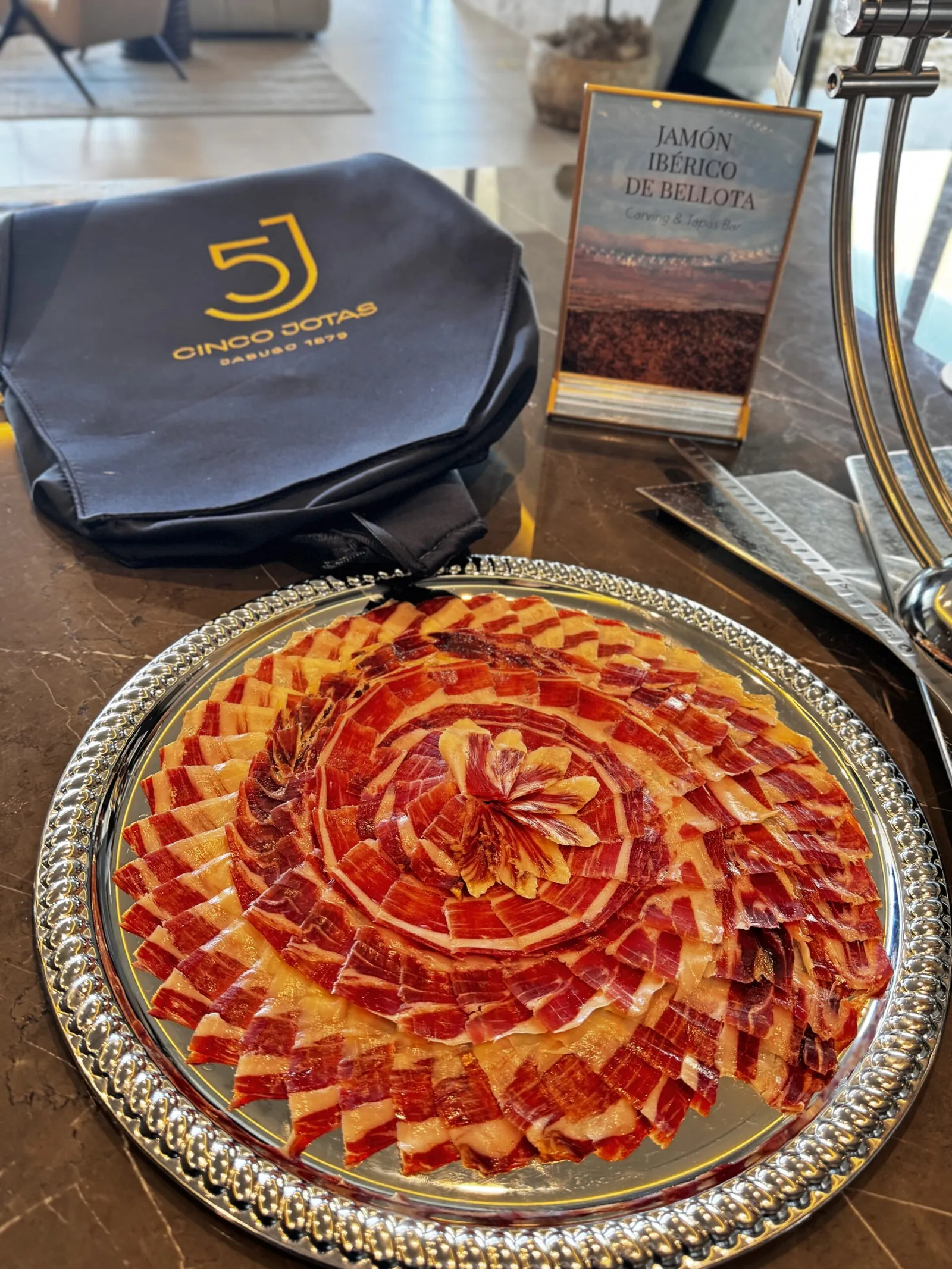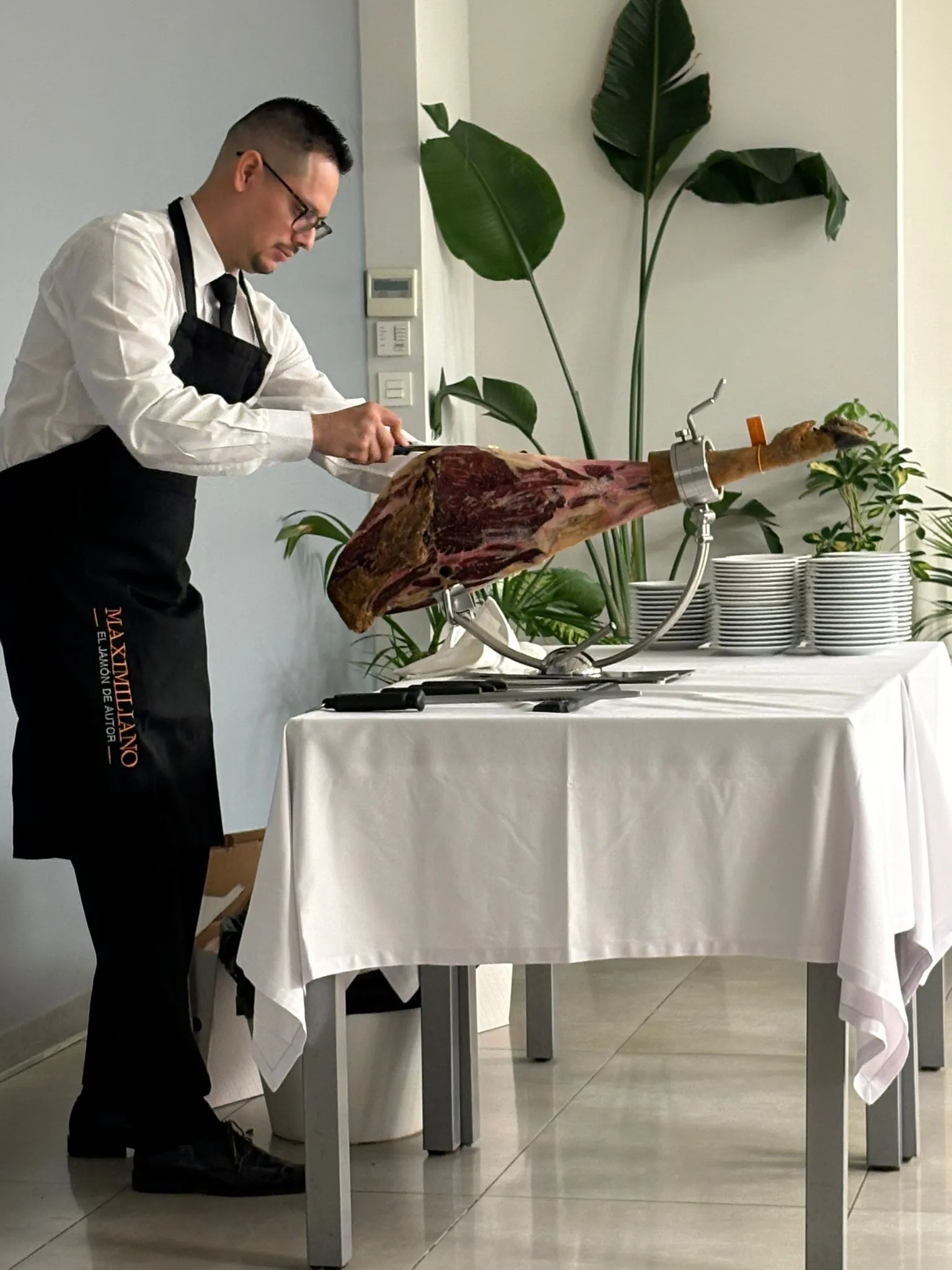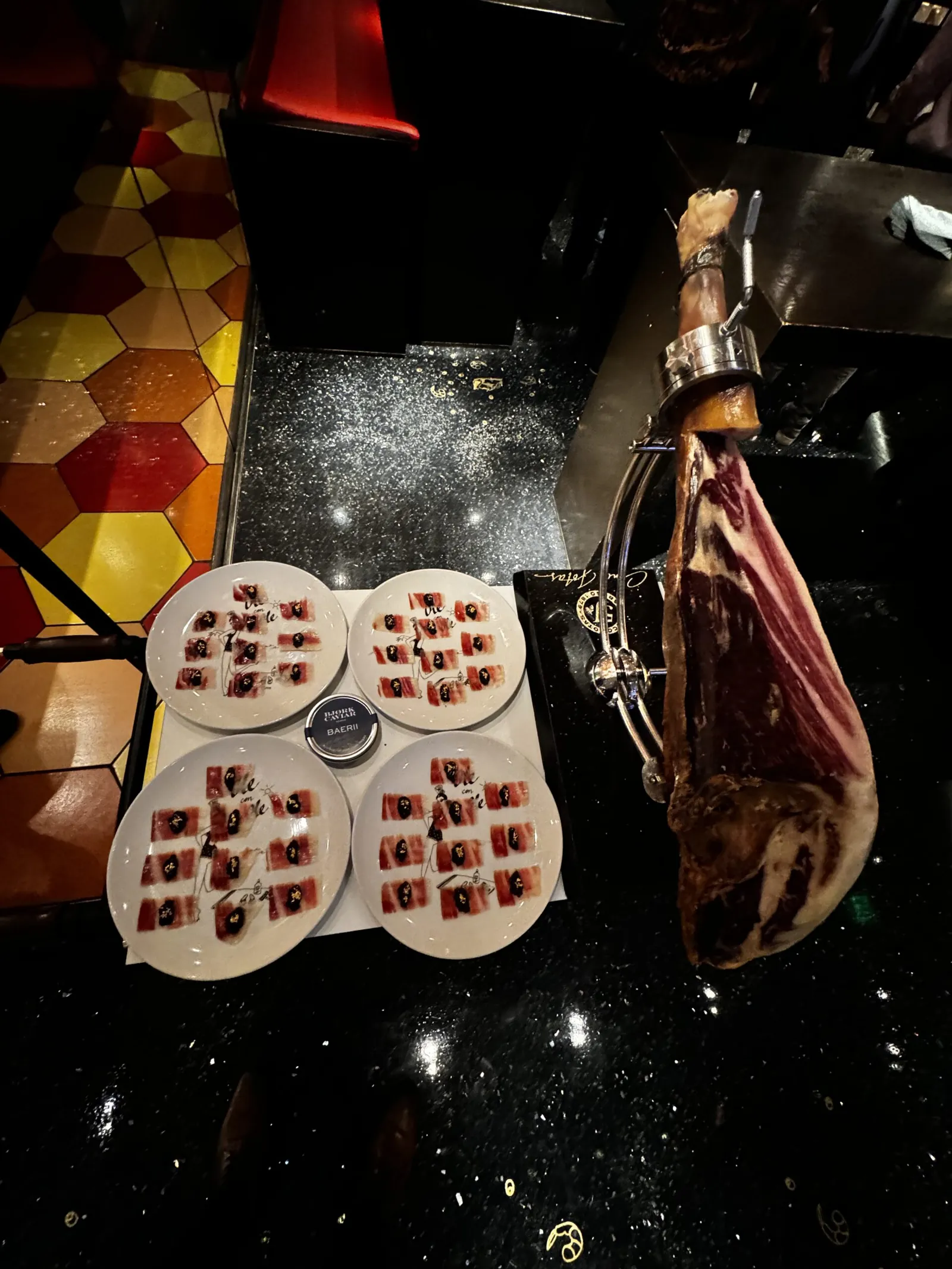
A whole Spanish ham offers more than sliced platters. Some sections are suited to fine slices, others work better diced, and some material must be discarded. Recognising the difference helps you plan useful portions without assuming that the entire weight of the leg can be served.
Use the regular sections for slices
The maza and babilla provide relatively broad surfaces to work across. Keeping the carving face level makes it easier to produce thin slices without digging into the meat. When you reach bone, use the appropriate small knife to separate the meat rather than forcing the long blade. The guide to the different parts of a Spanish ham explains the main areas.
Change the format around the bone
Narrower, more fibrous areas do not always yield comfortable slices. Usable meat can be carefully separated and cut into small dice. Serve it on its own or reserve it for cooking. A different format is better than tearing the meat in an attempt to produce slices where they are no longer practical.
Give the trimmings a planned use
Edible trimmings can add flavour to croquettes, scrambled eggs or vegetables. Remember that they contribute salt, and taste before adding more. Separate portions as you work, use clean utensils and follow the supplier's storage advice. Food left exposed on a guest table should not automatically be mixed back into freshly prepared reserves.
| Part | Possible use | Limit |
|---|---|---|
| Regular carving meat | Thin slices | Do not force the blade against bone |
| Usable shank meat | Small dice | Separate hard material |
| Edible trimmings | Cooking | Store appropriately |
| Bone suitable for culinary use | Stocks and broths | Ask a professional to portion it safely |
| Rind and deteriorated fat | Discard | Do not count them as servings |
What to do with the bone
If it is in suitable condition, a ham bone can flavour a stock. Ask the supplier or a butcher to assess and portion it with the right equipment. A slicing knife is not designed for this job. Not every leftover should be kept: if you are unsure about its condition or storage history, ask the professional who supplied the leg.
Discuss yield using actual information
The total weight includes bone, rind and external fat. Edible yield depends on the individual leg, curing and trimming. There is no fixed number of platters that applies to every ham. For an event, first estimate the edible weight needed, then ask for a yield estimate for the selected legs.
With private ham carving, we can agree in advance what will be served during the celebration and how the remaining product will be handed over.
Explore ham carving for weddings, corporate events and private celebrations.
Check availability ↗