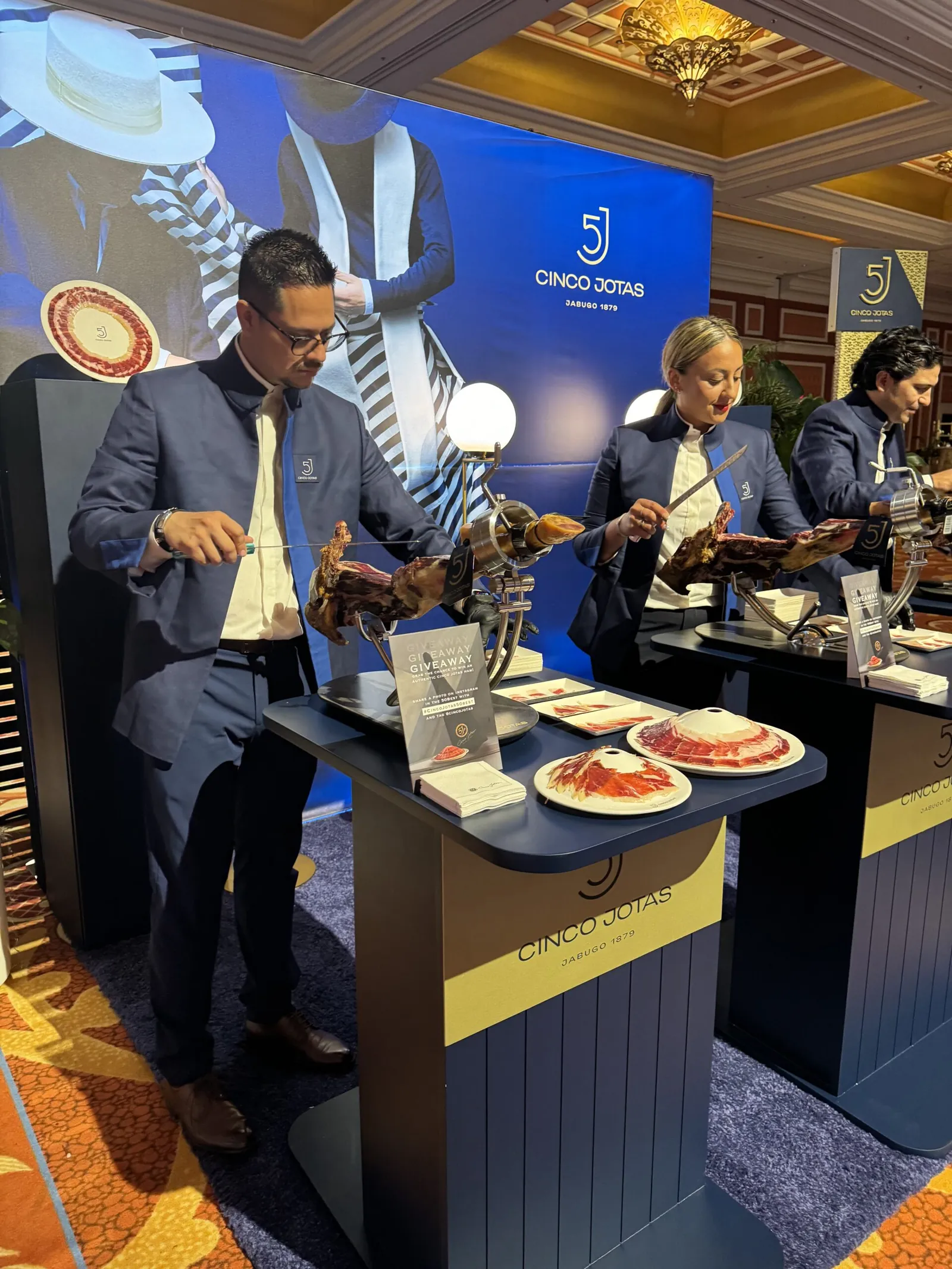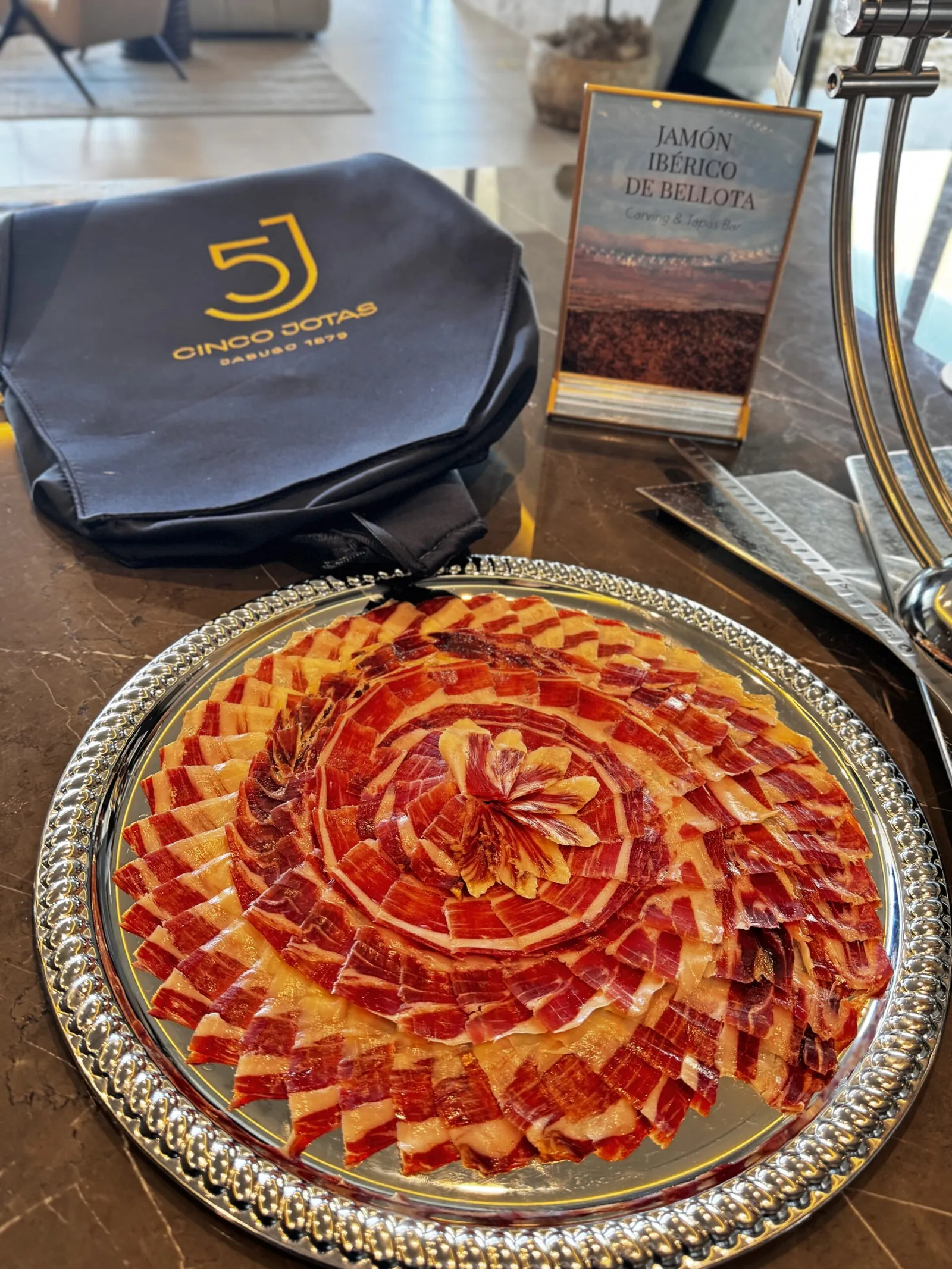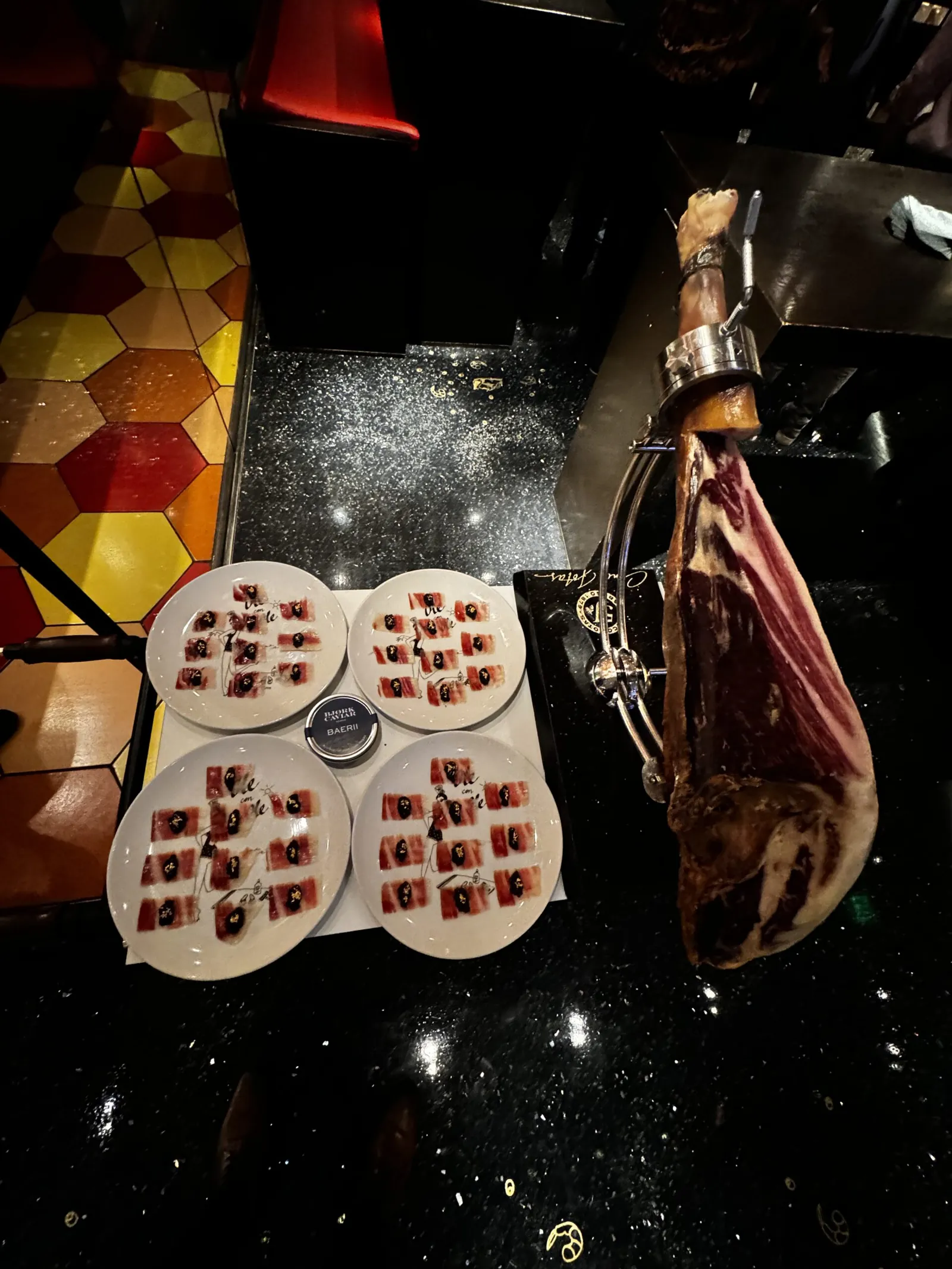
Ibérico and Serrano refer to different products, while jamón and paleta distinguish two parts of the animal. Separating those decisions helps you compare more than price and size. The right choice depends on your taste, how quickly you will eat it and how you want it served.
Ibérico and Serrano: read the product name first
Ibérico ham comes from animals with the percentage of Ibérico breed stated on the label. Within that designation, there are different feeding and rearing categories. Serrano is generally made from white-pig breeds and has its own product designation. Neither name tells you exactly how an individual leg will taste.
Marbling, salt, curing time and the producer's work all affect texture and aroma. Not all Ibérico ham is acorn-fed, and a black hoof alone is not enough to establish a category. Read the complete label and ask the supplier for specific information.
| Comparison | What changes | What to check |
|---|---|---|
| Ibérico or Serrano | Breed origin and designation requirements | Label and producer's description |
| Bellota, cebo de campo or cebo | Feeding and rearing category for Ibérico | Full product designation and seal |
| Jamón or paleta | Hind leg or foreleg | Weight, bone and intended use |
Bellota, cebo de campo and cebo are different categories
Bellota refers to the acorn-fed category; cebo de campo and cebo identify different feeding and rearing systems. Read these terms alongside the breed percentage. The seal colour helps identify the category, but does not replace the label. The guide to choosing Ibérico ham explains the colours. Avoid vague claims about the highest category without stating which characteristics matter for your meal.
Jamón is the hind leg; paleta is the foreleg
A jamón is usually larger and offers broad areas for carving. A paleta has a different anatomy, is usually smaller and has a different balance of meat and bone. The carving technique must adapt accordingly. Flavour intensity also depends on curing and the individual leg; this is not an automatic ranking of better and worse.
Choosing for home or an event
- At home: consider how quickly you will finish it and whether a whole leg or sliced packs suit you better.
- A large reception: plan edible quantity, carving pace and the rest of the menu together.
- A tasting: an explained comparison can be more interesting than choosing by category alone.
- Budget: compare the full service and the product that will actually be served, rather than bone-in weight alone.
Send the guest count and format through contact. For an explained experience, explore ham tastings and brand events.
Explore ham carving for weddings, corporate events and private celebrations.
Check availability ↗